Thursday, April 28, 2011

Police Reserve Officer Role & Professionalism Highlighted on PoliceReserveOfficer website


The role and professionalism of today's Police Reserve Officer is highlighted on a new website: PoliceReserveOfficer.com. I created the website to help handle the many questions I field on the topic of police reserves. As a former law enforcement reserve, around stints as a police chief, police academy director, and criminal justice professor, I fully appreciate the enormous contribution and sacrifices of the around a quarter of a million men and women who serve under many titles depending on local rules and preferences. Some of those monikers include: reserve, auxiliary, special, supernumerary, and intermittent law enforcers.

Whatever the name, reserve officers undertake the mission of the badge for their communties and for the approx. 700,000 full-time counterparts for little or no compensation at at great personal risk.

One of the articles on the website addresses the ultimate sacrifice that police officers, deputy sheriffs, and state troopers make which sadly includes reserves as well. It is: The Ultimate Sacrifice: Line of Duty Deaths Underscore Police Reserve Officers' Service.


Another article I wrote exclusively for this website addresses the use of reserve officer service to boost a full-time applicant's attractiveness for hire. This is a particularly valuable move as the competitveness for few salaried slots has greatly intensified given the current governmental budgetary climate. Any edge is very useful for the candidate.

Reserve officers gain valuable training, experience, and contacts. The article is called: Police Job Jumstart: Police Reserves Standout.

Whether you are a reservists, full-timer, law enforcement executive, aspiring officer, or just interested individual, check out the website and learn more about this great segement of our public safety service branches.

The PoliceReserveOfficer.com video is below and gives more highlights of the website dedicated to the professional volunteer and part-time law enforcement officer.

Saturday, April 16, 2011

Pretend Police: Are Impersonators Stopping You?


Pretend police in your mirror lights flashing and siren blaring is a scary prospect for all drivers on the road. Factor in being a woman alone or driving late at night and the prospect can be even more terrifying.

As a police expert, speaker, author, and media commentator, I hear what folks' police, crime, and safety related concerns are. And so, it was little surprise that quite a few people have been reading my latest police article for Examiner.com, "Pretend Police: Safety Tips for Drivers Being Stopped." As Examiner.com's designated "police examiner" for their national edition, I had a feeling that the article would strike a nerve for all concerned about police, crime and safety issues on an issue that really happens. I was right on target as the article opened with real life cases of police impersonators arrested in Florida, Massachusetts, California, and Pennsylvania.


Fake fuzz are out there and they are stopping drivers on the highways with pseudo cop accoutrements. The illicit equipment on the nabbed impersonator law enforcement officers have included badges, uniforms, radios, flashing lights, sirens, guns, and of course, a police style vehicle such as the ubiquitous Ford Crown Victoria.

The article gave safety tips, as I also do via my TheCopDoc.com website, on what to do if you think that a pretend police officer, deputy sheriff, or state trooper is trying to stop you.

The real police certainly want to stop police impersonators from engaging in their illegal conduct, arrest them, and bring them to justice. Fake fuzz endanger the public and law enforcers alike.

Check it out and comment below on The Cop Doc blog, on my Facebook page, or on the Examiner.com article. Have you been stopped by the Pretend Police?

Here is the link to the PoliceImpersonator article I wrote: http://www.examiner.com/police-in-national/pretend-police-safety-tips-for-drivers-being-stopped

Sunday, April 3, 2011

WORLD PREMIERE of new The Cop Doc Radio Show Promo Video


Here is the WORLD PREMIERE of the new The Cop Doc Radio Show promo video. The video highlights the arresting topics such as Officer Down!, Policing Japan's Crisis, Cops and Crazies, and Domestic Violence. There are many more topics that have been covered on the show encompassing Police, Crime, and Safety. The show is geared for law enforcement and non-law enforcement listeners as part of The Cop Doc's mission to explain complex justice topics in understandable terms.


The Cop Doc radio show has had numerous guest experts on the program and the promo video featured radio show guests Criminal Profiler Pat Brown, Dave "Buck Savage" Smith, and police guru Roy Bedard. A complete lists of guests and topics can be viewed at www.TheCopDoc.com.

This is fast paced, rocking beat video that showcases the police, crime and safety topics show. The show was recently moved to it's new time of 7:00 pm EDT on Blogtalkradio to make it more available for guests and listeners.


In addition to the live show that can be listened to via the Internet on Blogtalkradio.com or on the telephone, listeners can also enjoy the archived version via many application platforms including Apple iTunes, Windows Media Player, AppleCoreMedia, GoogleListen, and PodTrapper.

Check out the video below. And listen to The Cop Doc radio show in the Blogtalkradio player at the bottom. Or you can click on the link to go to the Blogtalk radio show page: http://www.blogtalkradio.com/the-cop-doc


Listen to internet radio with Dr Weinblatt on Blog Talk Radio

Thursday, March 31, 2011

The Cop Doc Radio Show- Policing Japan's Crisis

Tune for an arresting version of The Cop Doc radio show tonight as we discuss police and crime in the wake of Japan's disasters. Joining us tp provide insightful analysis will be John Jay College of Criminal Justice's Dr. Maki Maria Haberfeld and University of New Mexico's Dr. Aki Roberts. The new time for the show is 7:00 pm eastern. If you miss the show, you can listen to the archive version by clicking the link or going to Apple iTunes.

TheCopDoc- Policing Japans Crisis 3/31/2011 - Dr Weinblatt | Internet Radio | Blog Talk Radio

Warring Cops Disgraceful


The following is an editorial I wrote. It appeared on the front page of PoliceLink.com today.

The article is about the warring cops in neighboring Pennsylvania towns that were caught on viral video and thus make the work of good law enforcers that much more difficult. It is heartening to see good law enforcerment people condemning this behavior and evidenced by the comments on PoliceLink.

Warring Cops on Video: How to Make Our Mission Even Tougher
By Dr. Richard Weinblatt, The Cop Doc


I’m sure many of my fellow law enforcement professionals watched the video carried on Fox News Channel, myfoxphilly.com and other outlets that showed neighboring Pennsylvania law enforcers at war with each other. I think all would be as embarrassed for our profession as I was.

Far from not establishing good pro-active community relations programs, the viral video makes these officers from Darby and Colwyn boroughs look like the proverbial keystone cops and worse.

According to Fox, the incident caught on video all started when a Colwyn officer crossed the street into Darby to nab a man that had just punched a woman in the face. The officer had apparently been flagged down by the woman.

The problem (at least in the eyes of the Darby Police chief) was that it was in the neighboring Delaware County borough of Darby. While I understand the jurisdictional legal concerns that may be present, I would argue that the officer couldn’t just continue driving and ignore the woman. So he stopped to render aid and control the situation.

As the report details, the Darby Police chief came soon thereafter to the scene yelling at the Colwyn officer to get out of Darby. Incredibly, officers had to use their skills – you know, the ones they use on emotional members of the public at calls for police service - to deescalate the police chief, but it was to no avail. Officers then had to physically intervene to stop the fight from escalating to a physical level. All of this played out in public view involving the very type of behavior that we are called to control. Incredible.

Now, I know it’s best not to believe all that is put out by the media. And I also know that sometimes events happen before the video is rolling that help to put what is seen in context. That said, the video speaks volumes of the situation. I am hard pressed to find any justification for what I saw on the tape.

The damage to officers everywhere, including those on scene, is immeasurable. This impacts all of us in a number of ways.

1) We’re in an era where budget cutters do not see police officers and firefighters as the untouchable sacred cow immune to layoffs. Witness what happened in Camden, NJ not too far from the Philadelphia area. Officers were pushed off the public payroll. The same thing happened in Newark, NJ. Incidents like this do not help bolster the fiscal health of law enforcement agencies or their employees.

2) Many people who viewed this disgraceful video have used it as fodder for their call for regionalization of law enforcement services. While the concept itself is worthy of debate, it should not be on the coattails of clearly avoidable schoolyard kid style conduct.

3) That particular area of Delaware County, Pennsylvania, is apparently rife with crime and drugs. Such displays do little to convince the beleaguered community that their police are up to the task.

4) Leadership emanates from the top. If this is the hot-tempered publicly displayed behavior of the police chief, who should be the most seasoned, rationale, and calm person on the municipal police agency, I shudder to think what some of his subordinates may have done.

5) As a defensive tactics instructor who has handled volatile calls in uniform where emotions are high, I know it is a basic tenet that you must have control of yourself before you can expect to have control of the scene. With a man in custody and a woman being treated by medics on the street, no ongoing scene safety or investigation has control or integrity while the law enforcers themselves are arguing emotionally and publicly on the scene.

6) From a national perspective, long-standing critics of the police are already pointing to this video to bolster their anti-police argument. Their contention has long been that crime fighters are just street fighters with badges. They want people to believe their skewed view of law enforcers. This video does nothing to refute their argument and does everything to bolster it. They are able to apply a broad paintbrush to the 700,000 ethical and hardworking police officers, deputy sheriffs, and state troopers in the United States based on the actions of a few.

Specifically in regard to this incident, while we can blame the video and the news media for disseminating it, the reality is that if the officers, starting with the Darby police chief, had not acted in such a manner, there would be nothing news worthy to display. The Colwyn officer should have walked away from the chief and not been baited into a confrontation.

As professionals, we need to address this conduct and identify it as not worthy of our position of trust in the community. The days of circling the wagons or sticking our head in the sand are long gone in policing. Our credibility is at stake and we need to distance ourselves from such conduct and repudiate it.

The intensely bright spotlight on isolated viral episodes, such as what transpired in Darby, are diminished if we acknowledge them as being outside the standard of professional conduct we as professionals hold ourselves to. We need to highlight the good work done by 700,000 law enforcers in the United States, and many more internationally, that gets overshadowed by the tarnished badge behavior of a few. It’s hard to get the mission done that with emotionally charged, warring police chiefs and officers out there fighting.

As I’ve told basic law enforcement academy students for a number of years, we live in an era of video technology. You should always assume that you are on camera and should act in a professional manner worthy of the oath we took and the badge we wear. In short, the conduct should be such that it that would make your mother proud. I doubt the Darby police chief’s mother would be proud of her son today.

Dr. Richard Weinblatt, “The Cop Doc,” is a former police chief, ex busy jurisdiction patrol deputy sheriff, and criminal justice educator who has written articles and provided media commentary since 1989. He can be reached via www.TheCopDoc.com.

Here is the link to the front page article on PoliceLink where you can watch the video and judge for yourself:
http://policelink.monster.com/training/articles/152341-warring-cops-making-our-mission-even-tougher

Monday, November 29, 2010

News Interview on Officer Involved Police Shootings News Interview 11/29/10 Dr. Richard We...

My live in-studio news interview on WOFL Fox 35 News "Good Day" on the recent spate of police officer involved shootings.

Thursday, November 18, 2010

Does Size Matter? Small Agencies: The Cop Career Gatekeepers - PoliceLink

My latest article on PoliceLink.com on Small Agencies and Police Careers: Does Size Matter? Small Agencies: The Cop Career Gatekeepers - PoliceLink

Wednesday, November 17, 2010

Full Body Scanners Bad for America News Interview


As seen in the below two videos of an interview I did this afternoon with Central Florida News 13 reporter Jacqueline Fell in the station's downtown Orlando conference room, I do not believe that body scanners (as used by the courthouses and particularly by the TSA at airports) and other efforts to enhance the safety of the American people is the way to go.

Not only did Centrral Florida News 13 put the print and video version of the TV news package on my objection to body scanners up on their website ( http://www.cfnews13.com/article/news/2010/november/174083/Questions-continue-to-surround-body-scans - click on SCANNED IMAGES RELEASED FOR VIDEO OF NEWS REPORT ), they also put video of my raw interview on their website: http://www.cfnews13.com/video?clip=http://static.cfnews13.com/newsvideo/cfn/1117BodyScan_111720100546.flv

Tuesday, May 11, 2010

Tasering Sports Fans


Few are those who have not seen the now infamous video of a 17-year-old running on the Philadelphia Phillies ball field and being the recipient of a Philadephia Police officer's well-executed Taser shot. And many have become acquainted with the incident of the man that became disorderly and belligerent while Tiger Woods golfed away in Florida. Yesterday, I did a live via satellite interview with MSNBC anchor Tamron Hall on Taser and sports fans. As a former police chief, Taser instructor, and long-time law enforcement issues media commentator, MSNBC asked me on Sunday if I would appear on the Monday afternoon segment.

The segment had originally been slated to be six minutes or so, but was cut back due to the news surrounding President Obama's United States Supreme Court nomination announcement. I was unable to make a few of points given the time crunch. They also did not air a you tube clip of me being Tasered during training in 2004 that clearly demonstrates that you can be Tasered and walk away (like I did). But, alas, time did not permit. That's understandable as that is the nature of the TV news biz.

Also appearing was Petra DeJesus, a commissioner on the San Fransisco Police Commission. Ms. DeJesus, a civilian lawyer, was appointed to serve on the political commission. Ms. DeJesus is a vocal critic of the Taser and I believe that she is throwing the baby out with the bath water.


While Amnesty International, a great organization whose work I admire, and Ms. DeJesus trumpet deaths attributed to the Taser, they misunderstand the facts and ignore the greater good that Taser has done. I do agree that, much like a firearm or pepperspray, Taser is a tool that can be misused. But when we have bad shoots with a firearm, we do not propose getting rid of the police use of a side arm. Rather, we correctly deal with the individual officer's misconduct.

In the interview, I pointed out that many studies, including a fairly recent one by the U.S. Justice Department, have shown that the Taser is relatively safe. What I did not have time to go into in the interview is the deterrent effect that the red laser dot on the suspect's chest has. As I have stated in HLN Headline News and other media interviews in the past: the best fight for law enforcement to be in is the one that doesn't happen.

Most police officers and deputy sheriffs have seen resistant subjects give up when that red laser dot hits their chest. While they do not fear the firearm as they know it will not be used except in extreme, deadly force situation, they also know that the officer may fire that Taser.

As I opened up the segment, I answered Tamron's question by pointing out that I do not always take the position of the police. I examine each incident on its own merits, based on the information presented, and render an expert analysis. I told Tamron and the viewers that the two incidents at issue: the Philadelphia Phillies and Tiger Woods golf occurrences, appear to be proper uses of the Taser. Philadelphia Police Commissioner Charles Ramsey, former deputy superintendent of the Chicago Police and former Chief of the Washington, DC, Metropolitan Police, had already come out publicly saying that the use of the Taser was within departmental policy guidelines.

I pointed out that if someone were to come in to the Iron Man 2 movie that I saw this weekend and was loud, security would ask him to quiet down. I then took it further through the steps of law enforcement asking him to quiet down, then to leave, then to submit to the arrest that he resisted. The Tiger Woods golf guy was arrested for disorderly intoxication and resisting arrest.

Ms. DeJesus opined that Taser is too large a step to take for someone being disruptive and resisting arrest. I explained in the segment that whether the person is dangerous or not is not known. Law enforcement officers cannot read minds and we do not know what someone's intent is before they make an overt act to demonstrate their purpose.

I mentioned the case of Kansas City Royals first base coach Tom Gamboa who in 2002 lost the hearing in his right ear after two fans attacked him on the ball field. During the attack, a knife even fell out of one of the attacker's pocket. MSNBC host Tamron Hall jumped in agreeing and reminded Ms. DeJesus of the Monica Seles attack.

I said that the police are not mind readers. We do not know what people do before they do it. We in law enforcement can only deal with what we know at the time that we know it. We did not know that the 17-year-old young man who rushed onto the Phillies-Cardinal game field what his intent was. As has been demonstrated by Columbine and other events, teenagers can be dangerous too. That is especially true in the time that we live in.

Getting onto a ball field is not a matter of just stumbling a few steps. One has to overcome physical barriers and other security measures to make a conscious effort to enter the controlled and restricted space. The young man in this incident was charged with defiant trespass.

As for the incident at Tiger Wood's golf outing in Florida, I did not have the time to explain that St. Johns County deputy sheriffs only ended up Tasering the golf fan after security and then law enforcement had asked him to 1) stop, 2) leave, and 3) not resist arrest. The man was charged with disorderly intoxication and resisting arrest. I guess Ms. DeJesus and her ilk would rather that he be beaten into submission with a baton which is sure to cause broken bones and possibly serious injury or death. People forget that that is how it used to be done and the results were not pretty.


Ms. DeJesus in the segment thought that law enforcers should be able to just "muscle" people into compliance. As I mentioned in the interview, there is no magic bullet. Law enforcement officers can't just put their fingers on someone and put them out a la Mr. Spock of Star Trek fame.

I did not have time to point out is that San Francisco's own newly minted star police chief, George Gascon, tried to get his city to approve his drafting of a tightly controlled Taser policy. Interestingly, Ms. DeJesus' own commission voted narrowly four to three to turn down Chief Gascon's request.


Chief Gascon, by the way, is no slouch when it comes to law enforcement expertise. A lawyer himself, Chief Gascon came to San Francisco from his post as chief of the Mesa Police in Arizona. Prior to that, he served with the Los Angeles Police Department rising to the position of Assistant Police Chief and Director of Field Operations under the legendary Chief Bill Bratton.

No mere rubber stamp of hard-line law enforcement types, not all of Chief Gascon's policies were welcomed warmly by the Mesa Police officers. That should give more credibility to his independent assessment and support of Tasers. The device is good for policing and good for the community that law enforcement serves.


San Fancisco is the only big city to not allow it's police officers the less than lethal option that the Taser affords. Other steps such as the baton have been shown to cause more injuries and deaths to officers and suspects when deployed.

What I also did not have time in the MSNBC to elaborate on is that the deaths have been time after time shown to be caused by other factors.

Not five minutes after leaving the TV studios in Columbus, OH, I received an email on my iPhone from a person who thought I was a bad man for supporting the use of Tasers. I get quite a few of these well-intentioned, but ill-informed messages. Without the sender's name being mentioned here, here is the text of his email:

It's unfortunate there are people such as yourself propagating a tool that causes death to stop a 17 kid from running around a ballfield in jest. That cop is an idiot, I don't know how a moron like that could get on the police force. You know what I mean; the taser. Do you have interest in the company that makes these things? I think you may. It's disgusting that there are idiot cops that are stupid enough to use it on harmless citizens. Instaed of teaching cops how to use a taser, why don't you teach them some common sense and how not to be a vigilante? You are just as responsible, and liable for any deaths that these taser's cause, and if I were a judge I would hold you liable in any court of law for the death of anyone killed by your taser's, and pressing the use of these things.


As I mentioned above, the officers did not know the young man's intentions. I don't think it is worth the risk. If something had happened, than folks would be saying why didn't the police do something or do something different. It's a damned if you do and damned if you don't situation.

And, no, I am not in any way compensated nor do I have any financial interest in Taser International, the makers of Taser. Remember, I am not a proponent of the Taser in every situation. The device, however, is a good tool and needs to be available for appropriate and professional use.

Some things that uninformed people, such as Ms. DeJesus and the email sender, are missing in the Taser debate:

- Officer and Suspect injuries and deaths have gone down
- Use of Force incidents have gone down
- The police deal with some people who have risk factors exacerbated since they tend not to have adequate preventative and diagnostic health care
- The police also tend to deal with some people who have ingested drugs such as cocaine and meth.
- Physical confrontations with the police are stressful events in and of themselves. Use of the baton and other physical and mechanical means actually prolongs and intensifies the stressful situation.
- The public overwelmingly in media run polls vote that the use of the Taser is appropriate.
- The public and media overreact and do not understand how the Taser works.


Most coroners have found that deaths come from the above contributory factors. While I fully agree that some Taser usage incidents have been wrong, and I am vocal in my rectifying of those situations, not all Tasers should be eliminated.

In general, the Taser is a useful tool on an officer's tool belt. The key is proper and professional policy formulation, training, supervision, and deployment. Used appropriately, the Taser is the closest thing we have today to Star Trek's stun phaser.

Sunday, May 2, 2010

Times Square Bomb & Arizona Immigration: Balancing Policing in A Democratic Society


Many Americans woke up this morning (Sunday) to the news that a bombing situation had been thwarted in a high profile hub of our nation: New York City's Times Square. They also awoke to see pictures of hundreds of thousands of people participating in rallies protesting the Immigration law (and it's slightly altered current incarnation) in Arizona. As a former deputy sheriff who worked on the border (as pictured above) and a former police chief, I see that both deal with ideas that go the very heart of who we are as a people and what ideals our country stands for.

DICTATORSHIP POLICING EASY

It is easy to police in a dictatorship. Sadam Hussein was able to keep murderous, warring factions of Iraq in check by being more murderous than those groups. At the other end of the spectrum, The anarchy that is Somalia has no central government or ability to speak of to keep the various local warlords in check.

The United States has long struggled with governmental control and it's most visible component is that of law enforcement. Policing in a democratic society is hard as is evidenced by the events of the past few days in Times Square and in Arizona.

In general, I do not believe that we should sacrifice our ideals in order to be safer. In the words of U2 lead singer Bono (I know he is not the biggest philosopher around, but his thought here is true): "We do not need to become a monster, in order to defeat a monster."

ALERTNESS

What saved the day in New York City was the vigilance of a civilian street vendor. This veteran took a moment to notice an unusual situation and reported to a mounted New York City Police officer. The officer in turned notified his chain of command and the NYPD Bomb Squad and NYC FBI field office bomb techs responded. The system worked there thanks to the alert observation and good law enforcement response.

In Arizona, police intervention could go too far in a situation which is really larger and more political in nature (My earlier blog post on Blogger and my interview with Alternet.org goes into more detail). If the police go with the Arizona scenario, we have started to move down the slippery slope that personified our country's treatment of the Japanese during World War II., as well as the Nazis. The solution needs to come from Washington, DC, so as to preserve our localized, democratic style of policing.

Having the police pull double-duty stretches already thin resources, opens fiscally-strapped local governments up to lawsuits whether they enforce the new law or not, and will propel crimes towards non-illegals as Hispanic victims and witnesses will be intimidated and not help the police stop predators. Those predators will also victimize non-illegals. The predator illegals that are here will not be scared by this; only the non-violent illegal aliens will be wary of the law and police.

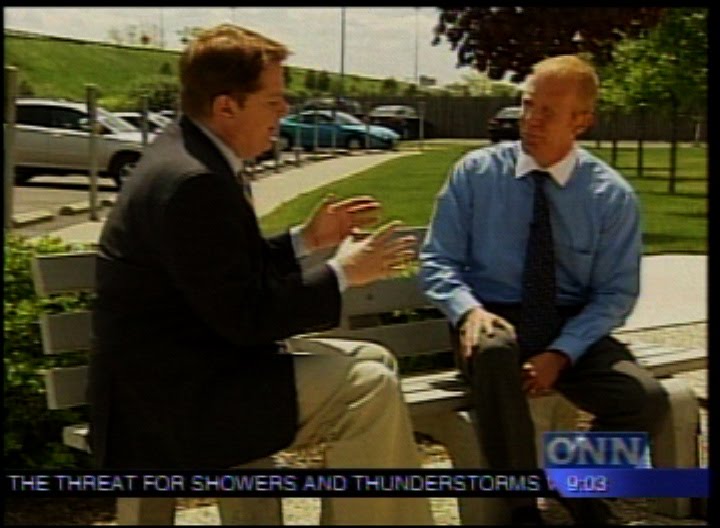
Other states, such as Ohio, are thinking about copying the Arizona law. As I told the Ohio News Network (ONN), that would be a mistake. In both cases, what we need is alert people that will bring law enforcement into the picture when violence (or the potential such as bomb) enters the scene. The collection of intelligence has stopped some threats from coming to fruition and the same could be used more effectively to combat illegal immigration.


In this country, many officers have observed that people always want the laws enforced- as long as it is not against them. For example, all across the country, officers have agreed with my own experience having run radar in residential subdivisions in response to community outcry. The biggest offenders end up being the residents themselves and then they are not so happy to have that enforcement presence. Officers reading this can relate to it in their own policing experiences.

Even has a member of the police community, I have always been a staunch defender of the protections, rights, and even technicalities of our society. As I have said before, "It is those rights that protect you, me, my wife, and my son." I want a government that is strong enough to protect us, but not strong enough to move away from its democratic principles.

Much like the scales of justice, we must balance police and the power of the government enforcers in the middle. To much movement in either direction turns into the dictatorship of old Iraq or the anarchy of Somalia. We don't want to be either country. We are the United States of America and all the ideals that it stands for.

Tuesday, April 27, 2010

Arizona Illegal Immigrant Law Bad Policing


In the furor that has followed the signing of the Arizona illegal immigrant law by Governor Jan Brewer and supported by Maricopa County Sheriff Joe Arpaio (creator of the famed tent city jail and the self-proclaimed "Toughest Sheriff in America"), few have stopped to look at the effect it has on policing. In a word it is bad.

I come at this perspective after having served as a deputy sheriff in a border state - New Mexico (I am in the picture above as a patrol deputy sheriff in rural New Mexico).

First I was in Dona Ana County (a 4,000 square mile county with 50 miles along the Mexican border) and then as a Patrol Division deputy sheriff II. with the Santa Fe County Sheriff's Office (a 2,500 square mile state capital county). I also served as a police chief in North Carolina and as an educator of law enforcers. I have worked for many years providing police services for legal and illegal immigrant populations.


Above: With fellow deputy sheriff in New Mexico.

And that's the key here, folks. The police provide police services. And we provide it to all. And we do it in a challenging economic, fiscally austerity-laden governmental structure. The Arizona law sets policing back many years.

BAD COMMUNITY RELATIONS

First off, the police rely on information. If you mandate that they investigate and arrest a very vulnerable population, those folks won't come forward with information. I would have thought that in policing a democratic society, we moved beyond intimidating the victim. We want to encourage victims to come forward with information.

As a police chief in North Carolina, I had a program where I spoke in uniform at churches all around the city in an effort to reach out to the community. I stopped my unmarked Ford Crown Victoria one day at a church that served Hispanics. They scattered afraid that I would try to deport them (under the Arizona law, deportation would happen only after a possible jail sentence and fine). I convinced the pastor that I wanted to reach out to their community and that they were deserving of the police's protective service also.


I spoke that Friday night (speaking some Spanish and some translated) and started to get more and more information from the good folks in that church. First it was little nuggets of information to test if I was trustworthy. Little by little the information got bigger. It crossed into items that effected the immigrants' legal neighbors. So the issues touched all and their information helped the entire community.

If nothing else, it is important to understand that easy victims are the first step for predators. They then become emboldened to prey on the legal residents of our nation. Crime and quality of life concerns do not know borders within our communities.

RACIAL PROFILING

I respectfully disagree with Sheriff Arpaio's interpretation of the mandate to investigate and detain upon a finding of reasonable suspicion concerning legal resident status. Sheriff Arpaio says that it is not racial profiling. I disagree. Having had to compile reasonable suspicion while investigating crimes, I can see how police officers and deputy sheriffs would have no choice. Any person who appears to be of darker color with an accent would have to have those facts as part of the reasonable suspicion building blocks.

Given the current scenario, people who have some of the "building blocks" (dark skin, accent) will be stopped repeatedly and questioned. That is more akin to a police state. We should not sacrifice what has made our country great to have an appearance of action.

The reasonable suspicion part of this will be legally challenged and officers will be confused as to how they can investigate without running afoul of legal issues. This is not as simple as the public thinks and officers cannot just move from the police-person consensual encounter to reasonable suspicion on flimsy information.

BURDEN TO SYSTEM

Sheriff Arpaio and others have contended that they run white people as well through the system. I disagree with that position from several angles. We need to have discretion as to who you run through the system to check for warrants and other information.

I know some agencies and officers have departmental or personal policies that call for running every person they come in contact with. That is not always advisable or feasible. Once the arrest warrant comes through, or the officer decides to make a lower priority arrest, he or she is tied up and is unable to handle higher level calls and assist other officers. The officer has no choice and has to follow the court ordered arrest warrant or, as in this case, the mandated detention of the illegal alien. Some agencies are too busy handling 911 calls for police service to be tied up handling smaller warrants or illegal alien investigations.

VICTIMIZING THE VICTIM

Worse yet, making arrests will have a chilling effect on victims. They will be afraid to come forward. This is something that we are already battling against and the law sets us way back.

The most vulnerable of victims, women and children, will suffer the most under this law. Domestic violence investigations is one area that has truly been dealt a blow now. Few victims will have the courage or trust that they need to overcome often brutal psychological, emotional, and physical abuse.

As a uniformed patrol officer in New Mexico, I had to repeatedly assure people that I was not Immigration or the Border Patrol. That I was not interested in their status, but rather in their safety. It was hard to gain their trust. This law shatters that trust for officers with boots in the dirt trying to gain information.

In my own experience as a uniformed peace officer, I often chose not to run someone who came to me as a victim as I knew arresting them would not be in the interest of justice. If I knew of the existence of an arrest warrant, that was different. But I certainly did not go out of my way to traumatize someone who already had come forward to me as a law enforcement officer. Sometimes at great personal peril.

UNFUNDED MANDATE

This is an unfunded mandate to already fiscally strapped counties and municipalities. Arresting, charging, and jailing a person is not cheap. Law enforcement can barely keep up with what they need to do for public safety, let alone this requirement that does not give the needed dollars to make it a realistic financial picture. This law does not just call for the turning over of illegal aliens to the feds for deportation. An entire investigation and prosecution has to take place, along with the expensive jailing of the accused, which has a jail sentence and fine attached to it. Only later does the possibility of deportation come up. And the federal government may nullify this by refusing to take the person.

This law, while an attempt to keep America whole, is blatantly un-American. It undermines many of the principles that we are founded on and places the police and county sheriff's offices in an untenable position. It is at odds with our mission to gain the trust and cooperation of our democratic society. Without that trust, the most vulnerable victims, and our ideals, will suffer.

Sunday, December 6, 2009

Watching "Clash of the Dinosaurs" on Discovery Channel. Phenomenal program.

Tuesday, November 17, 2009

Orlando Office Building & Ft. Hood Shooter Situation: Excellent Police Response


The recent tragic office building shooting in Orlando, Florida, underscores my quick move to offer kudos to the Orlando Police Department in their quick response. Patrol officers were on scene in approximately one minute. As I explained in three live breaking news MSNBC TV interviews and the MSNBC.com website, as well as for local stations in Orlando, FL, (WESH 2 - NBC - News and Central Florida News 13) and Columbus, OH, (WCMH NBC 4 News), first responding patrol officers moved quickly and may have moved the shooter to leave sooner than he originally intended. They exemplified what we want to see in our law enforcers in times of crisis: brave decisive action backed by training and experience. When others run away, these men and women lived up to their oaths and ran towards the danger zone.


I detailed too quite a few show bookers, producers, news anchors and reporters, law enforcement response to active shooter situations changed historically at the Columbine High School incident in Colorado. As many will recall, that situation saw first responding patrol officers standing by waiting for SWAT team officers. Meanwhile, students were being shot and the gunmen moved through the structure unfettered.

Law enforcement trainers took a hard look at response tactics in those situations and a new approach was born that was used in Orlando, as as well in the Ft. Hood shooting in Texas. The idea is to have first responding patrol officers form small, mobile teams to dynamically and aggressively move towards the sound of gunfire or where the perceived threat may be. Along the way, they encounter people who they shoo behind them towards hopefully other arriving teams of officers. I'm not detailing the formations of these teams or other tactical details that could compromise the officers and the public.


I was involved in this training when it started and evolved. I found it to be an effective means to, in our parlance, neutralize the threat. It is training that is grounded in much thought and research. I know this training and I know the law enforcement agencies involved in the Florida response. Since I ran an Orlando-area Police Academy at Seminole Community College, I trained many of the men and women that responded on November 6, 2009.

The Orlando Police Department, as well as the Orange County Sheriff's Office, are known for their unusual proficiency via a bunch of training hours and resources devoted to this method. Jason Rodriguez, the Orlando shooter, picked the right part of the country (from my perspective) as the officers in Central Florida are among the best in the nation at this type of call for police service.


On a related note, for those who think that I am anti-law enforcement in my news interviews, you haven't watched more than a few of my interviews or visited my website (such as www.TheCopDoc.com). My recent stance on the excellent work of the Orlando Police Department certainly underscores that. Many of them are available for viewing on my youtube.com channel (http://www.youtube.com/user/richardweinblatt).

What is interesting is that I have a chorus of folks who feel that I only take the side of the po-po given my background in law enforcement. Both are far from the truth. Sometimes I side against law enforcement's actions in a particular matter. Other times, I defend their actions. And still other incidents I have taken a middle of the road neutral stance given that not enough facts were presented yet.

I let the facts speak for themselves and, coupled with my training, education, and experience, assess and communicate a professional opinion of complex justice issues in terms that are understandable. That has been a central part of my life's mission.

That my mission can help to highlight and explain the laudatory action of law enforcement officers in Orlando and Ft. Hood is particularly satisfying. Some of the TV news interviews are featured below.


Monday, November 9, 2009

Back & Biceps Exercise Video: New Ideas for Law Enforcement & Others


New from The Cop Doc: Shot on location at the Advantage Club in Newark, Ohio (just East of Columbus, Ohio) for law enforcement folks and others looking for new approaches to their back and biceps workouts. I shot the video on Saturday night. I hope it will help people. Changing up your workout and muscle confusion is key to making progress towards your fitness goals. The video has been uploaded here at Blogger, as well on Facebook, MySpace, youtube, DailyMotion.com, Veoh.com, Break.com, PoliceLink.com, and other websites.


In the video, I link the biceps as a followup to fellow "pulling" muscles: the back. I also stress the use of proper form and diet as essential to any workout program. I also touch on the concept of "super-setting" and "negatives" when I suggest doing a couple slow downward movement close grip pull-ups (or chin-ups) between each bicep exercise.


I also throw in some use of elastic bands with the sitting preacher curl. By wrapping the bands from each end of the curl bar to a corresponding dumbbell on the floor, you are able to keep the tension consistent even at the top of the curl motion.

Working out and a healthy lifestyle is vital for those in public safety and even for others in our society. I hope this video motivates and helps people. Let me know how it works for you.

Tuesday, July 21, 2009

Harvard Professor Gates and Racial Profiling: Police Expert's Perspective


As a college criminal justice educator, police expert media commentator, and former police chief, I have commented extensively police situations and have done so before on everything from Taser to the Caylee Anthony case. In some cases I have defended officers on the scene and explained their perspective. But in others, I have eshewed the circle the wogon mentality. I call it for how I see it based on commonly accepted police practices and an eye on the big picture of policing in America.

The big story today: Professor Gates racial profiling case. I have read the Cambridge Police reports and have several thoughts on the matter.

Bottom line: while the officer was justified in investigating a crime, he stated in his report that he was satisfied that the occupant, Professor Gates, was legally allowed to be there and that no further danger was present. That, from a law enforcement perspective, is THE key phrase. It was at that point he should have left. This became a battle of competing egos.

I have walked away once my legal duty was done even with someone yelling. The courts have long ruled that people can yell at the police. Disorderly conduct is a stretch especially when you (order or ask) the person to step outside so that non-police folks can be exposed to that yelling and be "alarmed" as an element of disorderly conduct. Just the perception alone is bad.

We need to see the big picture in policing. Perception is reality. We as professionals need to be sensitive to other people and their reality. Here as Director of the Institute for Public Safety at Central Ohio Technical College (which includes the Basic Police Academies) and other places I've been before, we drive home the mantra of respect and understanding for other folks' perspectives.

While perhaps the Professor was overly agitated, it was the police presence that was creating the agitation. Remove the police presence, and the agitation is gone. This is not unlike the theory that Los Angeles Police and other police agencies are correctly gravitating to regarding police chases. Bring in a helicopter, stop chasing with ground units, and the fleeing driver will stop driving at the high rate of speed.

We in policing are supposed to be professional problem solvers. The courts have ruled that it is not illegal for officers to be called names. Doesn't make it pleasant, but it is part of the career of peace officer. We are supposed to deescalate situations even if it means walking away.

I even saw this a few years back while doing a ride along with constables of the London Metropolitan Police in the U.K. A marked police car I was riding in broke down. People riding by would give me and the two uniformed bobbies obscene genstures. The officers just laughed. They understood that it was not personal, just directed at the uniform. They also knew it was part of policing in a democratic society.

While I believe in officer discretion, I do not believe that it was executed wisely here. I feel that he should have seen that the big picture of what we do and why we are here was forgotten for the heat of the moment. We in law enforcement are supposed to be above that.

Having investigated numerous reported break ins in my career, having supervised and trained officers who do so, I can comment on accepted police practices at each stage in the call for police service and how the officer handled it based on his own report.

To say the least, this call was not handled well. My educated prediction is that the case against Professor Gates will go away. In the meantime, officers nationwide will have to contend with folks that have yet another seed of discontent with law enforcers. All because the big picture was not heeded here.

Officers, and I agree, are all about officer safety. Officer safety begins with respect and being a peace officer. Walking away when it is not worth it and the legal need to remain to investigate has been satisfied. That did not happen here.

Thursday, April 9, 2009

Police Expert on Traffic Stop of NFL Player Ryan Moats by Dallas Police Officer

Like many folks in the criminal justice and law enforcement education and practitioner arenas, I was distreessed to see the video of NFL player Ryan Moats with Dallas Police officer Robert Powell during a traffic stop. As many people saw on countless youtube and television replays, Mr. Moats was enroute to a hospital in Plano, Texas, to try to see his mother in law before she passed away. Mr. Moats had his hazard lights on and went through a red light garnering the attention of Officer Powell. The Dallas law enforcer pursued Mr. Moats into the hospital emergency room parking lot and detained him for 13 minutes of a heated exchange.

This was an upsetting situation and a blow for law enforcement in the eyes of the community. As a former police chief, former full-time patrol officer, and law enforcement educator/trainer, I view this as contrary to our role in society. I made a video with my views on the situation. That video is featured here below on Blogger, as well as posted on my youtube.com, Facebook.com, Google Video, MySpace.com, Break.com, LiveLeak.com, Seesmic.com, Vimeo.com, Veoh.com, and DailyMotion.com pages. And I see that it has already been picked up by video sites in Asia and elsewhere.

The events as they transpired in the Moats traffic stop were just plain wrong. At the police academy I used to teach in and manage, just North of Orlando in Central Florida, I exhorted the students to remember what it was like before they pinned the badge. I told them to treat people as they would want their mother, father, brother, sister, wife, husband, boyfriend, girlfriend, etc. to be treated.

The Moats family was in crisis. We are trained to handle people in crisis. As the mature, professional police officer, it is part of the job to deescalate situations and to see the big picture of what is happening. A simplistic view that is black and white (no pun intended here) is not the right path. This was a shade of grey.

To view this as simply go through light and get ticket is not right. Was the Moats family animated? Yes. So was the officer. Any veteran knows that yelling and being disrespectful only breeds more of the same from the motorist or civilian we are interacting with. If someone is agitated, we need to figure out why and calm them down.

If we as a society believe in simple cause an effect in terms of offense and punish, than we should do away with traffic officers and only have robotic, automatic red light cameras everywhere. But clearly we don't all agree that the camera route is the path to take. We need human beings as officers to deal with their fellow humans with compassion. Discretion is a key word here. We legally grant officers that latitude for a reason. It needs to exercised wisely.

Clearly, this was not the case of a lying motorist (which we all run into all to often). A nurse came out twice and a uniformed Plano Police officer came out once pleading for the Dallas Police officer to release Mr. Moats so he could see his mother in law before she passed away. Tragically, that did not happen.

In Florida and other states, you can mail the ticket. I commented on a similiar stoty for the news media a couple years ago involving a Hillsborough County Sheriff's Office Deputy Sheriff in Tampa, Florida, and offered the same solution.

This is also a tragedy for the Powell family (wife and kids too). A young officer has lost his career for what may be an unusual behavior. I have not obviously seen his personnel file, nor am I in the internal affairs/professional standards unit of the Dallas Police Department.

If it is a one-time occurence, and his apology and resignation is genuine, than I hope he learned and gets another position at a good, reputable law enforcement agency. If not, than it is better that he be doing something else. The stakes are too high in law emnforcement. We are not allowed to have a bad day. When we have a bad day, people can die.

Saturday, August 23, 2008

PoliceOne.com column: What law enforcement can learn from the Caylee Anthony case


I have done numerous media interviews on the Caylee Anthony missing child case that is transpiring right here in Orlando, FL. I have strong feelings on how law enforcement agencies and experts need to be handling cases of this publicity laden magnitude. My latest "Weinblatt's Tips" column on law enforcement website www.PoliceOne.com came out yesterday (08/22/08) and reflects my multi-year call for law enforcement responiveness and partnership with the media. The article, "P1 Exclusive: What law enforcement can learn from the Caylee Anthony case," covers the need for law enforcement agencies and experts to interact with the media.

According to PoliceOne.com, the website, based in San Francisco, CA, has almost 700,000 unique visitors each month with more than 176,000 registered law enforcement members representing over 14,000 agencies.


The latest column is featured on the front of the website, as well as in the primary slot in today's PoliceOne.com email newsletter (which is emailed to 94,000 law enforcement professionals). It can be read by clicking the link: http://www.policeone.com/writers/columnists/Richard-Weinblatt/articles/1728471-P1-Exclusive-What-law-enforcement-can-learn-from-the-Caylee-Anthony-case/

The concepts in the column reflect my sentiments as documented even way back in a February 1992 media relations article I wrote for Law and Order: The Magazine for Police Management. As I mentioned in the latest PoliceOne.com column, the concepts I wrote about in 1992 are dated, but not outdated. The media storm swirling around law enforcement in the Caylee Anthony case are only going to become more frequent. It's time that we embrace this police-media partnership and fill up the airtime with accurate law enforcement generated information.

Weinblatt Police Training Videos: Driver Call Back Traffic Stops and Dealing with the Opposite Sex

Today I am blogging about two police training videos I created which were featured on the law enforcement website www.PoliceLink.com. I write regularly for PoliceLink. The videos are also up on my youtube page: http://www.youtube.com/user/richardweinblatt

I hosted, produced, directed, and edited, the videos with volunteer actor assistance from recent graduates from the Seminole Community College Police Academy that I manage here in Central Florida.

The February 18, 2008 video, "Dealing with the Opposite Sex," was based on my popular PoliceLink.com article "Ten Tips for Dealing with the Opposite Sex" published on November 26, 2007. I'm in the video as is Officer Nicole Gusaeff and Officer Daniel Barnard from our SCC Basic Law Enforcement Academy class #87. I even included some funny outtakes/bloopers at the end of the video. Nicole and Daniel were good sports and obviously had a lot of fun being featured in the video. I think the blooper part is more popular with folks than the serious section of the video.


The article can be read here: (http://www.policelink.com/training/articles/7528-ten-tips-for-dealing-with-the-opposite-sex)

This was a fun video and followed another, even more popular PoliceLink.com article (from October 10, 2007) that I wrote. The article was on a traffic stop concept not practiced by officers as much as driver's side or passenger side approach. My driver call back article can be read on PoliceLink.com here: http://www.policelink.com/training/articles/5883-safe-driver-call-backs

That first video, which I created on January 12, 2008, is based on my article. It starred me and my voluntary assistant, Officer Gabriel Garcia. Gabriel graduated from our SCC Basic Law Enforcement Academy class #90. He was a good sport and had fun acting in the video, although I did not incorporate an outtakes/bloopers section until the second video.

You can see the first video on youtube: http://www.youtube.com/watch?v=dirc5wOFOgc

What surprises some people is the time it takes to shoot these videos. It takes three or four hours at least to set up the shots and do several takes. The multiple takes are needed to account for mistakes, as well as multiple camera angles. It then takes a couple hours to do the editing. I use iMovie HD 6 either on my Apple PowerMac G5 Quad Processor computer or my Apple MacBook Pro laptop to do the editing on my movies.

I've gotten tons of feedback from both current and aspiring law enforcement officers. Of course, as with any tactical training, you can get ten police instructors in a room and get ten different opinions on how to do things. With all my videos, I stress that they are only guides to general law enforcement situations. Specific legal and tactical guidance has to be sought from agency trainers and departmental policies.

Another type of video I've done has dealt with topical law enforcement issues of the day. Some examples of them were the Andrew Meyer University of Florida Taser incident, the Ohio police Taser situation, and the Paris Hilton lack of interest in being role model statement from her appearance on Late Night with David Letterman.

I am thinking of doing either more of these police training videos and/or more police expert opinion on the topical law enforcement issue of the day videos (prior examples of these can also be seen on my youtube page: http://www.youtube.com/user/richardweinblatt). What do you think?

Saturday, August 9, 2008

Caylee Anthony Police Expert Analysis on News Interviews


You would have to be under a rock not to notice the large amount of coverage garnered by the Caylee Anthony missing child case. As someone with law enforcement and media interviewing experience, it came as no surprise that I've ended up doing quite a few interviews on the topic. Even more than before, this investigation has lead to an incredible number of people coming up to me seeking answers to their many questions.

As I told WESH2 News (the NBC affiliate) anchor/reporter Gail Paschall-Brown, I fear that this case will have a sad ending. In my experience, the longer a child is missing, the more grim the prospects become.

This is a tragic case for a number of reasons. This missing two-year-old, now turned three-year-old, may have already been located if law enforcement officials were able to get straight answers from the get go. Sadly, As a former police chief who has investigated homicides and missing persons cases as a sworn law enforcer, it does not surprise me that people will use deceptions and omissions when dealing with police investigators seeking to ascertain the well-being of their own family.

I have told many folks that the Orange County Sheriff's Office investigators here in Orlando, FL, handling this case, Sgt. John Allen and Cpl. Yuri Mellich (who just finished two years in OCSO homicide), are not new kids on the block. They know how to investigate these types of cases. They are experienced, diligent and highly trained.

As for the smell of old pizza and the smell of death in the Pontiac. As anyone who has smelled a dead body left for some time, there is no confusing the two. As I pointed out in a Central Florida News 13 in-studio interview I did on 7/24/08 with Anchor Ybeth Bruzual, even Cindy Anthony, the grandmother, stated that in one of the 911 calls she made.

In a video package of a 7/23/08 interview I did with top rated ABC affiliate WFTV Channel 9 Eyewitness News, her statements concerning the pizza and my contradictory statements refuting the chance of confusing the two distinct smells were played together. Experienced law enforcers especially would not be confused by the pizza presence. As I told WFTV reporter Eric Rasmussen, that is not a chance that the two could be interchanged.


If you add on top of that the positive hit indication of two cadaver dog teams, the direction becomes clearer. As I explained on the WOFL Fox 35 Morning News in two live on-set interviews with host Heidi Hatch on 7/23/08 and in a video package with WVEN Univision 26 Noticias (the Spanish language news) News Anchor/Producer Jimena Cortes on 7/24/08, these dogs are highly trained and have a keen sense of smell. They would not be confused by pizza. You could put a ham sandwich next to them and they would not be distracted.

As for their sense of smell, they can detect the smell of decomposition deep underground even with a concrete slab being present. I don't think the human and canine experts could get this wrong.

It does appear that the family is now cooperating a little more with the investigators. They have discussed the issue of the Anthony family shed burglary and gas can theft with them. I figured that it was worth looking at and I told WFTV Channel 9 in another interview on 7/29/08 that investigators would have to look at the gas can shed burglary and theft situation.


That is good that family is now talking with the OCSO investigators. They are the ones with the interviewing expertise. They are the ones with the big picture of all of the tips that have to be logged in and prioritized. Seemingly insignificant information might be relevant when coupled with other information known by investigators.

It takes a lot of experience and training to conduct these investigations and no one should undertake such an endeavor on their own. To do so risks the integrity of the investigation.

I have also been asked why investigators withhold information. As I told reporters and news directors, who understand this as they have covered crime stories for years, information is always held back especially in high profile cases. They do this to be able to test the veracity and credibility of those who might confess or come forward with information. People have been known to do so with false information.

Information is also held back in order to have more material to offer the news media at a later date in an effort to revive the story. As time passes, sometimes people become more comfortable coming forward. Media coverage later helps the investigators to get more tips.

All of this is being combined with the evidence that they have collected and submitted for analysis on several different forays. Such evidence includes the stain, hair, and dirt from the Pontiac's trunk, the shovel borrowed from the neighbor, and the clothes retrieved and cleaned by Cindy Anthony from the Pontiac and later taken by investigators from the Anthony home. As I explained to Central Florida News 13 reporter Stephanie Coueignoux on 8/6/08, the evidence has to be looked at and analyzed. The forensic evidence, combined with their interviews and document collections will help them to piece together what amounts to a giant jigsaw puzzle.

This saga is sure to continue for a little longer. However, unlike the Trenton Duckett missing little boy case, I think this one will be solved. Let's hope so that the Anthony family, friends and the community can get some answers and some closure. Something that I know that countless loved ones of other missing children across Florida and the nation are hoping for in their respective cases.

Below is my Fox 35 Morning News two live in-studio segments from 7/23/08. Other TV news interview clips are on youtube at www.youtube.com/user/richardweinblatt